Table of Contents
- Route Overview
- Days 1 and 2: Baku Without a Car
- Day 3: Gobustan and the Dry South
- Days 4 and 5: Shamakhi, Lahic, and the First Mountain Roads
- Days 6 and 7: Sheki as the Cultural Base
- Day 8: Quba, Khinaliq, or a Simpler Return
- Best Season and Car Choice
- FSTA Route Support
TL;DR: Build an Azerbaijan road trip around Baku, Gobustan, Lahic, Sheki, mountain scenery, food stops, and calm pacing instead of rushing from one famous sight to the next.
Overview
Azerbaijan looks compact from a distance, but a good road trip needs more patience than the map suggests. Baku sits on the Caspian with fast highways radiating out of the city, then the mood changes quickly: dry Gobustan hills, old Silk Road towns, forested slopes near Ismayilli, and high villages reached through Quba and the Greater Caucasus.
This eight-day route is designed for travelers who want the country to unfold gradually. It keeps Baku as the practical start and finish, uses Sheki as the cultural anchor, and adds mountain roads only where the timing, daylight, and road conditions make sense.
Route Overview
A comfortable loop is Baku for two nights, Gobustan as a half-day or full-day drive, Lahic and Ismayilli for the first mountain section, Sheki for two nights, then Quba or Khinaliq before returning to Baku. If your trip is shorter, cut Khinaliq first. If it is longer, add a slower night near Gabala or Quba instead of turning every day into a transfer.
The direct Baku to Sheki drive is roughly 358 kilometres and usually takes 4.5 to 5.5 hours without major sightseeing stops. With Diri Baba Mausoleum, Shamakhi Juma Mosque, Lahic, Nohur Lake, or Yeddi Gozel Waterfall added, treat it as a full travel day.
Days 1 and 2: Baku Without a Car
Do not rush to collect a car the minute you land. Baku's Old City, the Boulevard, Highland Park, the Carpet Museum area, and central restaurants are easier by foot, metro, or ride-hailing. Use the first morning for Icherisheher before the lanes fill up, then save sunset for the waterfront or the hill above the Flame Towers.
On the second day, choose one modern architecture focus such as the Heydar Aliyev Center, which sits around 7 kilometres northeast of the Old City. Pair it with food markets, tea, and a slow evening. This gives you time to adjust before longer driving days.
Day 3: Gobustan and the Dry South
Gobustan is the obvious first drive because it is close, dramatic, and different from the capital. The rock art reserve sits about 67 kilometres southwest of Baku, and the surrounding mud-volcano landscape feels raw and exposed. Visit the museum and petroglyphs first, then continue to the volcano area only if the tracks are dry enough.
A regular car can handle the highway, but the final mud-volcano approach may require a local 4x4 transfer depending on the route and weather. Wear shoes you can clean, bring water, and do not drive onto soft ground after rain.
Days 4 and 5: Shamakhi, Lahic, and the First Mountain Roads
Leave Baku early and drive west through Shamakhi. Diri Baba Mausoleum and Juma Mosque both make worthwhile stops because they break the day naturally before the road climbs toward Lahic. The final approach to Lahic is narrow and scenic, with stone lanes, copper workshops, and mountain air waiting at the end.
Stay in or near Lahic if you want the village after day-trippers leave. Otherwise continue toward Ismayilli or Gabala. Keep this day flexible: roadside fruit stalls, viewpoints, and weather changes are part of the route, and arriving in Sheki tired after dark is the easiest way to spoil the rhythm.
Days 6 and 7: Sheki as the Cultural Base
Sheki is the reward for slowing down. Give it two nights if you can. The Khan's Palace, caravanserai courtyards, old streets, halva shops, and silk history all deserve more than a rushed lunch stop. Early morning and late afternoon are the best times to walk, especially around the palace district.
Use the second Sheki day for Kish village, local museums, or a gentle market visit instead of packing in another long drive. Sheki works best when meals and tea breaks are treated as part of the itinerary.
Day 8: Quba, Khinaliq, or a Simpler Return
Khinaliq is one of the most memorable mountain villages in Azerbaijan, but it is not a casual add-on from Sheki. It normally works better as a separate Quba-based extension or as part of a longer northern loop. If you only have eight days, choose between the high-village detour and a calm return to Baku.
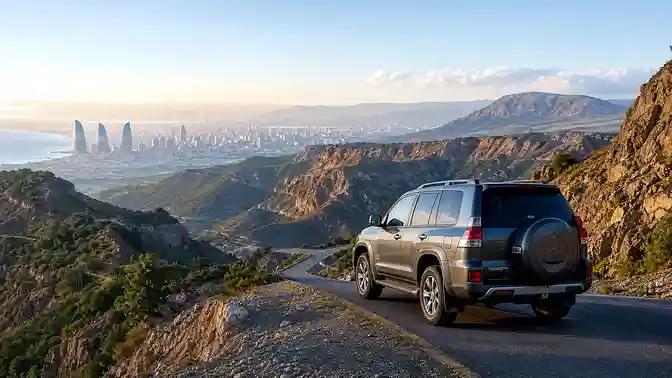
When roads are clear and your timing works, a high-clearance SUV makes the northern mountain section more comfortable. In winter or after heavy rain, ask locally before committing. In all seasons, plan mountain driving in daylight.
Best Season and Car Choice
April to June and September to October are the easiest months for this route: warm enough for Baku evenings, clearer for mountain roads, and less punishing than high summer. July and August are workable but hot around Gobustan and Baku. Winter is best kept to Baku, Absheron, and lower routes unless you have current road information for Quba or Khinaliq.
A normal sedan is fine for Baku, main highways, and Sheki in good weather. Choose an SUV if your plan includes Lahic side roads, Khinaliq, rough viewpoint tracks, or family luggage. The extra clearance is more about comfort and margin than bravado.
FSTA Route Support
FSTA can help separate walking-city days from rental-car days, compare SUV sizes, and think through wider Caucasus routes that include Georgia and Azerbaijan. For any cross-border plan, confirm vehicle documents and current border rules before locking the route.