Table of Contents
- 1. Baku Is Not a Quick Stopover
- 2. The Wind Shapes the Day
- 3. Distances Feel Bigger Than They Look
- 4. Tea Is Part of the Rhythm
- 5. Food Has Regional Weight
- 6. Border and Train Rules Need Current Checks
- 7. Russian Helps, but English Is Growing
- 8. Cards Work, Cash Still Matters
- 9. The Mountains Change the Whole Trip
- What to Book Ahead
- What to Leave Flexible
- FSTA Route Support
TL;DR: A friendly first-time Azerbaijan guide covering Baku, mountain roads, tea culture, costs, landscapes, driving style, and practical route planning.
Overview
Azerbaijan surprises travelers because it does not fit neatly into the mental boxes people bring to the Caucasus. Baku feels futuristic and old at the same time. The Caspian coast is windy and urban. A few hours inland, the road can move through dry hills, forests, craft villages, and high Caucasus landscapes.
These are the practical surprises worth knowing before a first trip, especially if you are combining Azerbaijan with Georgia or Armenia.
1. Baku Is Not a Quick Stopover
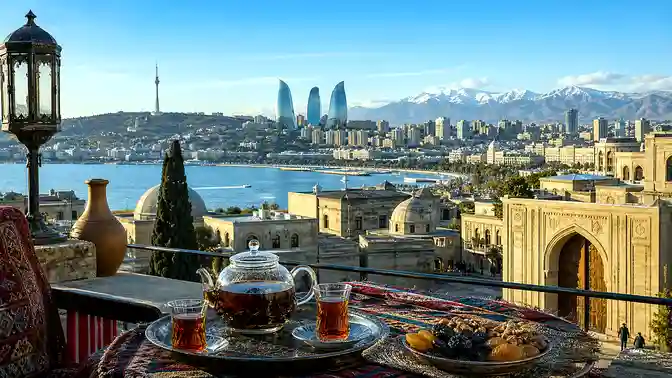
Baku needs at least two full days. The Old City, Boulevard, Highland Park, oil-boom architecture, food, and modern buildings such as the Heydar Aliyev Center all pull in different directions. Treat it as a real city stay, not only an airport base.
2. The Wind Shapes the Day
Baku is famously windy. A warm day can feel cool on the Boulevard, and winter gusts can cut through light clothing. Pack layers even when the forecast looks simple.
3. Distances Feel Bigger Than They Look
The direct Baku to Sheki drive takes around 4.5 to 5.5 hours. Khinaliq, Lahic, and Gobustan all require different road logic. Do not plan Azerbaijan by map pins alone; plan by daylight, road type, and where you actually want to stop.
4. Tea Is Part of the Rhythm
Tea breaks are not filler. They are how many travel days breathe. Build time for tea in Sheki, Lahic, Baku, or mountain villages and your route will feel less mechanical.
5. Food Has Regional Weight
Look for piti in Sheki, fresh bread, herbs, kebabs, qutab, preserves, and sweets. Markets and small local restaurants often teach you more than formal sightseeing.
6. Border and Train Rules Need Current Checks
As of June 2026, the Tbilisi-Baku passenger train has relaunched after a long pause, but land-border and vehicle rules remain something to verify before booking. Train access, border direction, and rental permissions should be checked for your exact date.
7. Russian Helps, but English Is Growing
English is common in central Baku tourism settings, but less reliable in smaller towns. Translation apps help. A few greetings and patient body language go a long way.
8. Cards Work, Cash Still Matters
Baku is card-friendly. Villages, small markets, family guesthouses, and roadside stops may prefer cash. Carry smaller notes once you leave the capital.
9. The Mountains Change the Whole Trip
If you only see Baku, you miss Azerbaijan's range. Lahic, Sheki, Quba, and Khinaliq show a different country. Add them carefully, with realistic driving days and weather checks.
What to Book Ahead
Book Baku accommodation, Sheki overnights, any internal flights, and international rail tickets as early as your route allows. For drivers, arrange vehicle pickup outside the densest city centre when possible. If your plan depends on border movement, confirm it close to departure.
What to Leave Flexible
Leave flexibility for weather, road stops, and food. Azerbaijan's best moments often happen between the headline sights: a tea stop near a mountain road, a bakery in Sheki, or a viewpoint you did not know existed until the road curved.
FSTA Route Support
FSTA can help first-time visitors decide where self-drive makes sense, where a driver or train is smarter, and how to combine Azerbaijan with Georgia without creating a border-paperwork headache.