Table of Contents
- Accommodation Is the Biggest Swing
- Food Can Be Cheap or Expensive
- Museums and Monuments Add Up
- Transport Is Good Value
- Where Travelers Overspend
- A Sensible Daily Budget Shape
- Money-Saving Moves That Do Not Spoil the Trip
- Where to Spend More
- FSTA Route Support
TL;DR: A practical Istanbul cost guide covering hotels, food, ferries, taxis, museums, airport transfers, neighborhoods, and where to save or spend.
Overview
Istanbul costs are moving targets. Inflation, exchange rates, neighbourhood choice, and season can change the budget quickly, so fixed price lists age badly. The better way to plan is by spending category: where you sleep, how you move, how many ticketed sights you choose, and whether you eat like a local or like you are on a special-occasion city break.
Use this guide as a practical budgeting framework, then check current prices before booking.
Accommodation Is the Biggest Swing
Budget rooms and hostels still exist, but the gap between basic and boutique is wide. Sultanahmet is convenient for first-timers but can be overpriced. Galata, Karakoy, Cihangir, Kadikoy, and Besiktas can offer better food access and transport, depending on your trip style.
Book early for spring, autumn, holidays, and major events. Check whether stairs, noise, or steep streets will matter for your luggage.
Food Can Be Cheap or Expensive
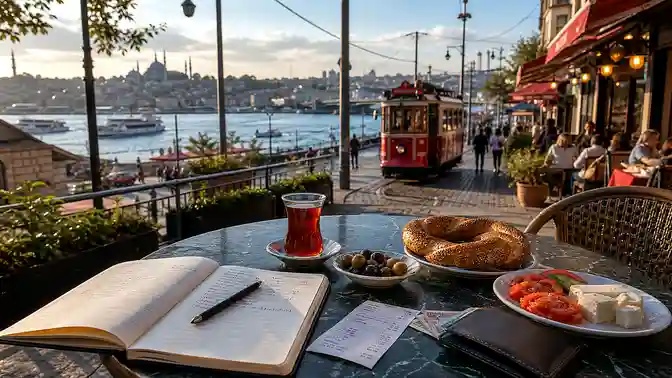
Street food, bakery breakfasts, lokanta lunches, and ferry snacks keep costs controlled. Sit-down restaurants near major sights can be mediocre and expensive. A strong food day might combine simit and tea, a market lunch, Turkish coffee, then one good dinner rather than three formal meals.
Museums and Monuments Add Up
Istanbul's paid sights are worth budgeting for. Palace visits, cisterns, towers, museums, and guided experiences can quickly cost more than transport and food combined. Choose your paid sights intentionally and balance them with free mosques, neighbourhood walks, ferries, and viewpoints.
Transport Is Good Value
Public transport is one of the best budget tools in Istanbul. Ferries, metro, tram, funiculars, and buses cover most visitor routes. Taxis are useful with luggage or late nights, but traffic can make them slower than rail. A rental car is usually a liability inside the city.
Where Travelers Overspend
Common leaks include airport taxis without a clear fare, eating on the most touristed streets, booking hotels far from transit, buying every museum ticket, and using taxis for routes that a ferry solves beautifully. Another quiet cost is exhaustion: overplanned days lead to expensive convenience choices.
A Sensible Daily Budget Shape
Think in tiers. Budget travelers should prioritise public transport, simple food, and fewer paid attractions. Mid-range travelers can add boutique accommodation, one paid sight per day, and better dinners. Higher budgets are best spent on location, guides, hammams, and special meals rather than constant taxis.
Money-Saving Moves That Do Not Spoil the Trip
Use ferries as both transport and sightseeing, choose hotels near rail or ferry lines, eat your main meal at lunch, and mix paid monuments with free neighbourhood walks. Istanbul is generous if you stop equating value with ticketed attractions.
Where to Spend More
Spend on a well-located hotel, one excellent guide, a proper hammam if it matters to you, and a memorable meal. Spend less on taxis in traffic, hotel breakfasts if the neighbourhood has bakeries, and rushed combo tours that leave you too tired to enjoy the evening.
FSTA Route Support
FSTA can help compare the cost of keeping a car for regional days versus using Istanbul transport first and starting the rental only when the road trip begins.