Table of Contents
- Choose an Easy First Base
- Handle Late Arrivals Before You Land
- Guesthouses Are Social, Boundaries Still Matter
- Transport Choices
- Women Traveling Solo
- Mountain Days Need Backup Plans
- Confidence-Building Routes
- Communication Habits
- When to Spend More
- Rental Pickup Habits
- FSTA Route Support
TL;DR: A calm solo travel guide for Georgia, Armenia, and Azerbaijan with base cities, transport, guesthouses, boundaries, mountain caution, and confidence-building routes.
Overview
Solo travel in the Caucasus can be warm, social, and confidence-building, but it works best when you plan the practical parts carefully. The region rewards independence; it also has late arrivals, mountain roads, language gaps, and guesthouse hospitality that can stretch your schedule.
The goal is not to avoid spontaneity. It is to make sure the basics are steady enough that spontaneity feels good.
Choose an Easy First Base
Tbilisi, Yerevan, Baku, Kutaisi, Batumi, and Sheki can all work for solo travelers, but your first night should be simple. Choose accommodation with clear check-in instructions, food nearby, and an address saved offline. Avoid remote guesthouses for a midnight arrival.
Handle Late Arrivals Before You Land
Pre-arrange airport transfers or know the exact official transport option. Install ride-hailing apps before travel, keep mobile data sorted, and carry your accommodation address in the local language when possible.
Guesthouses Are Social, Boundaries Still Matter
Family guesthouses are one of the region's great pleasures. Hosts may offer meals, wine, route advice, or introductions. You can accept warmly without surrendering your whole schedule. A clear "thank you, I need to sleep early" is useful.
Transport Choices
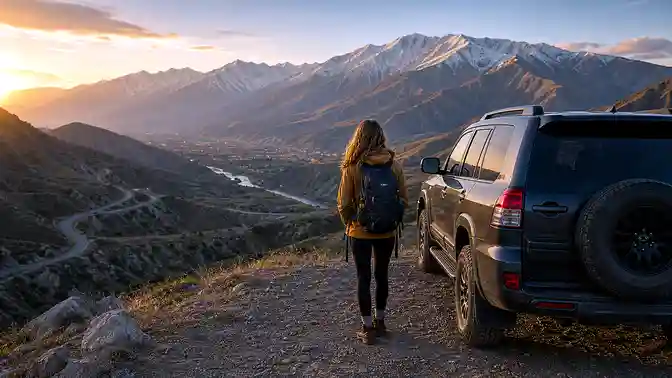
Public transport is cheap but can be tiring with luggage. Trains are calmer where routes exist. A rental car gives freedom, but solo drivers should be conservative: no night mountain roads, no remote off-road experiments, and no routes that depend on perfect weather.
Women Traveling Solo
Many women travel safely in Georgia, Armenia, and Azerbaijan, but the usual good habits apply: trust discomfort, sit where you feel comfortable in taxis, avoid isolated late-night walks, and choose arrival accommodation carefully. Dress expectations vary by country and setting; modest, practical clothing works almost everywhere.
Mountain Days Need Backup Plans
Tell someone your route, check weather, download offline maps, and carry enough water and layers. If a road, trail, or driver feels wrong, change plans. The mountains will still be there tomorrow.
Confidence-Building Routes
Start with easier wins: Tbilisi to Kakheti, Kutaisi to nearby canyons, Yerevan to Garni and Geghard, Baku to Gobustan, or Sheki with a driver. Leave Tusheti, remote Svaneti roads, and high winter routes for when you have more support or experience.
Communication Habits
Share your route with someone when driving or hiking alone. Save guesthouse phone numbers offline. Use messaging apps because many hosts and drivers prefer WhatsApp, Messenger, or local equivalents over email. A local SIM or eSIM is not optional for remote solo travel; it is part of the safety plan.
When to Spend More
Pay extra for an easy first night, a reliable transfer after dark, a better-located guesthouse, or a driver on a difficult mountain route. Solo travel is cheaper in some ways, but comfort spending at the right moment can change the whole trip.
Rental Pickup Habits
If you are driving solo, schedule pickup in daylight and ask questions before leaving: spare tyre, insurance, fuel type, emergency contact, mountain-road limits, and return procedure. Take photos of the car and save the rental contact offline.
FSTA Route Support
FSTA can help solo travelers choose between self-drive, driver service, airport handover, and route support so the car gives freedom without making the trip feel heavy.