Table of Contents
- Start With Breakfast
- Street Food in Istanbul
- Tea and Coffee Are Stops, Not Add-Ons
- Regional Food Worth Routing Around
- Markets and Bakeries
- Driving and Food Safety
- How to Eat Respectfully
- How to Build Food Into a Route
- Practical Food Etiquette
- FSTA Route Support
TL;DR: A food-focused Turkey travel guide built around breakfast, tea, markets, regional dishes, coffee, street snacks, and the way meals shape the route.
Overview
Turkey is too large and varied for a single "must-eat" list. Food changes by region, season, street, family, and market. The best approach is to build a loose flavour trail: breakfast culture, street snacks, regional breads, slow stews, sweets, tea, coffee, and markets that show how people actually eat.
For road-trippers, food also solves pacing. A good lunch stop can break a long drive better than another viewpoint.
Start With Breakfast
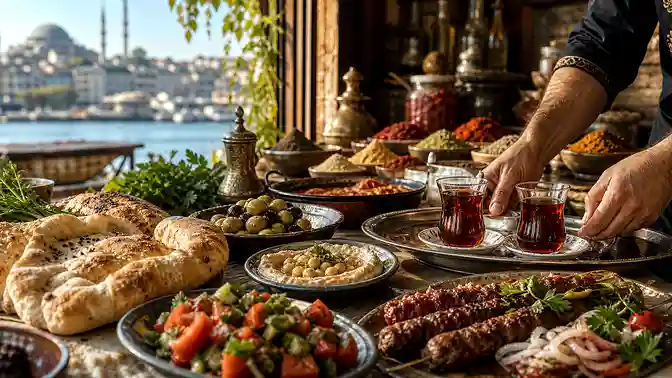
Turkish breakfast is not just a plate of food. Expect bread, cheese, olives, tomatoes, cucumbers, eggs, honey, preserves, tea, and regional extras. In Istanbul, Van-style breakfast salons are popular; in smaller towns, a simple village breakfast can be the better experience.
Street Food in Istanbul
Use Istanbul for the classics: simit, balik ekmek, doner, kokorec if you are adventurous, stuffed mussels from reliable vendors, roasted chestnuts in winter, and baklava or lokum from established sweet shops. Street food is best when it fits the neighborhood rather than becoming a checklist.
Tea and Coffee Are Stops, Not Add-Ons
Tea carries the day in Turkey. You will see it in markets, workshops, ferry terminals, and roadside stops. Turkish coffee is slower and stronger, often best after a meal. Accepting a glass of tea can turn a transaction into a conversation, especially outside the busiest tourist zones.
Regional Food Worth Routing Around
Gaziantep is the heavyweight for pistachios, baklava, kebabs, and deep culinary heritage. The Black Sea is the place for corn bread, anchovies, butter, cheese, and greens. Central Anatolia brings hearty breads, meat dishes, and slow winter food. The Aegean leans toward olive oil, herbs, seafood, and lighter meze.
Markets and Bakeries
Markets are useful even when you are not cooking. Buy fruit for the car, ask what bread is fresh, and watch what locals are ordering. Bakeries are especially good for road days because they give you breakfast, snacks, and emergency food when restaurants close between meal times.
Driving and Food Safety
If you are self-driving, keep lunches lighter on mountain or long-distance days. Heavy meals followed by hot afternoon roads are a bad combination. Carry water, avoid drinking alcohol before driving, and choose accommodation within walking distance of dinner when you want wine or raki.
How to Eat Respectfully
Ask before photographing kitchens or market vendors. Learn the words for thank you and please. Do not bargain over prepared food. If someone takes time to explain a dish, listen; the story is often part of the meal.
How to Build Food Into a Route
Use food as geography. Istanbul is ideal for street food and historic sweet shops. Cappadocia gives you pottery kebab and village breakfasts. The Black Sea adds corn, butter, greens, and tea. Eastern routes bring heavier winter dishes. Southeastern Turkey is a separate culinary trip, not a casual detour.
Practical Food Etiquette
In busy local restaurants, quick table turnover is normal. In family places, slower hospitality is normal. Learn to read the room. Tip modestly where service is good, and never pressure a small kitchen to customise everything to foreign expectations.
FSTA Route Support
FSTA can help build food stops into wider Turkey-Caucasus itineraries so meals support the route instead of becoming rushed fuel between drives.