
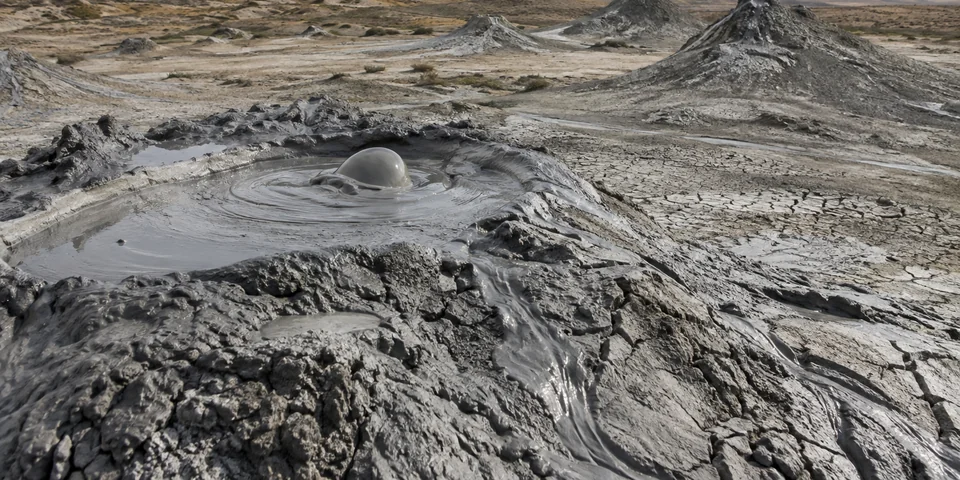
In brief: Plan a Gobustan and mud volcano day from Baku with sensible timing, what to expect, what to wear, and how to decide when a 4x4 or local guide makes sense.
Gobustan is the easiest way to make a Baku trip feel wild. In roughly an hour, the city drops away and the landscape turns dry, open, and strange: low hills, rock art, oil infrastructure, and mud volcanoes bubbling out of pale ground. It is popular for a reason, but it still needs practical planning.
The main sights are the Gobustan Rock Art Cultural Landscape and the mud volcano area. They are close enough to combine, but the road conditions are different, so do not assume the whole day is smooth highway.
How Far Is Gobustan From Baku?
Gobustan is about 67 kilometres southwest of Baku along the Caspian coast. In normal traffic, plan around one hour to the museum and reserve area. Leaving early helps you avoid city congestion and gives you cooler light on the rocks.
Start With the Museum and Petroglyphs
The rock art reserve is the structured part of the visit. Start at the museum for context, then continue to the open-air petroglyph area. The carvings are not all obvious at first glance, so slow down and use signage or a guide if available. This is the historical heart of the day, not just a prelude to the mud.
Wear shoes with grip. The rock surfaces can be uneven, and summer heat reflects strongly off the ground.
The Mud Volcanoes
Azerbaijan contains a remarkable concentration of the world's mud volcanoes, and the Gobustan area is the most accessible place to see them near Baku. The landscape is fun and surreal, but it is also fragile and messy. Stay on existing tracks, avoid walking onto thin crusts, and keep children close.
After rain, the approach can become slippery or unsuitable for normal cars. Many travelers use a local 4x4 transfer for the final section. That is often smarter than trying to prove a rental car can do more than it should.
What Car Do You Need?
The highway from Baku is straightforward. The final mud-volcano tracks are the variable part. In dry conditions, local drivers often manage them in ordinary vehicles, but ground clearance and caution matter. If the road looks soft, stop and arrange local transport rather than risking damage.
What to Bring
Bring water, sun protection, shoes that can get dirty, wet wipes, and a light layer for wind. There is little shade around the volcanoes. In winter, the area can feel colder than Baku because it is exposed.
Good Add-Ons
Bibi-Heybat Mosque and the oil-field landscapes south of Baku combine naturally with Gobustan. The Absheron fire sites are possible on a long day, but do not overpack the route if you want time at the rock art reserve.
Safety and Site Care
The mud volcanoes look playful, but the ground can be slippery, hollow, or soft. Do not stand on crusted edges, do not throw objects into vents, and keep drones grounded unless you are sure they are permitted. The reserve and volcano fields are landscapes to respect, not props.
Timing From Baku
A focused Gobustan visit can take half a day. A relaxed version with Bibi-Heybat, lunch, and photography takes most of a day. Avoid scheduling a long evening drive toward Sheki or Lahic immediately after if you have been walking in heat and dust.
How we can help
We can help decide whether Gobustan should be a standalone day, part of a Baku day-route plan, or the first leg of a longer Azerbaijan road trip toward Lahic and Sheki.
Sources
These official sources support the practical details in this guide. Recheck live schedules, prices, opening hours, and road conditions before you travel.
- Azerbaijan Travel official destination guide - official destination information for Azerbaijan, including cities, culture, food, and regional travel.
- Azerbaijan Railways passenger ticket portal - official Azerbaijan train timetable and ticket checks; the ticket portal may block crawlers, so verify schedules directly when planning.
- Baku Metro fare information - official metro fare and payment information for Baku.
- UNESCO World Heritage Centre - official heritage-site listings and conservation context.